
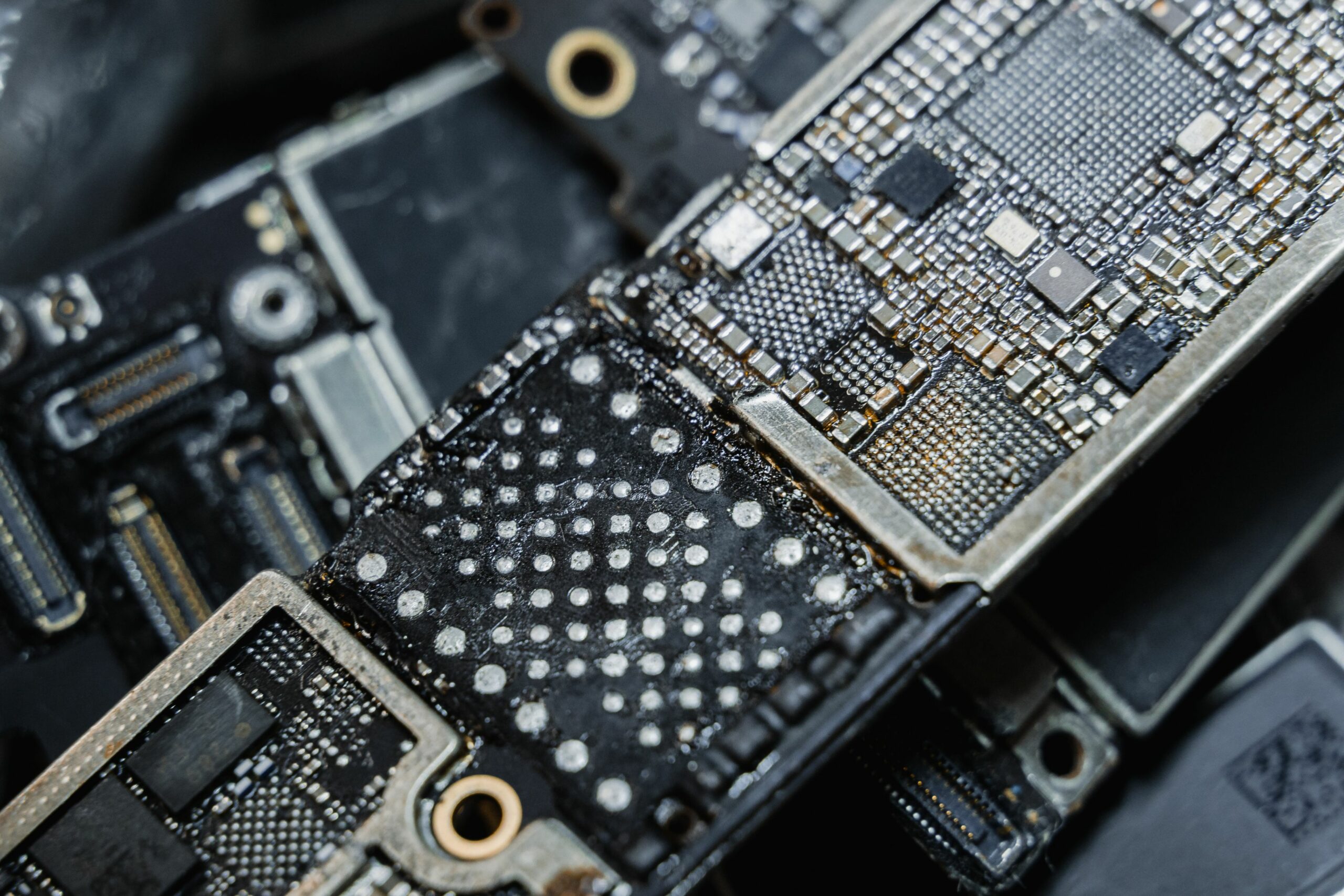

Artificial intelligence is not coming — it is here. The semiconductor industry sold $791.7 billion worth of chips in 2025, up 25.6% from the previous year, and is projected to surpass $1 trillion in 2026. Nvidia, the company at the centre of the AI revolution, has delivered a 78% return over the past year alone. Memory chip giants SK Hynix and Micron Technology have each surged over 200%. This is one of the most powerful investment megatrends of our lifetime, and South African investors do not need to miss out. You can access it directly through ETFs listed on the JSE, in rands, with no offshore account required.
Disclaimer: I am not a financial advisor. This information is for educational purposes only and should not be considered as financial advice. Always do your own research and consider seeking advice from a qualified financial professional before making any investment decisions.
But with great returns come great risks. AI stocks are trading at historically high valuations, the trade is becoming crowded, and nobody can predict how long the boom will last. In this article, we break down what is driving the AI investment surge, which JSE-listed ETFs give you access to it, and how to position AI exposure sensibly within a broader boring investor portfolio.
What Is Driving the AI Investment Boom?
The AI investment story is fundamentally different from the dot-com bubble of 1999. Back then, internet companies had no earnings and questionable business models. Today, AI is generating enormous, real, measurable profits. The demand comes from hyperscalers — companies like Amazon, Microsoft, Google, and Meta — who are spending hundreds of billions of dollars building data centres packed with AI processors. Every AI query, every chatbot response, every image generation requires massive computational power, and that power runs on semiconductors.
The semiconductor value chain has several layers, and 2026 has shown that the boom is broadening well beyond Nvidia:
- AI processors: Nvidia designs the GPUs that train AI models. Its stock has returned over 1,300% in five years.
- Memory chips: SK Hynix, Samsung, and Micron produce the high-bandwidth memory (HBM) that AI processors need. HBM supply cannot keep up with demand, and prices have surged.
- Networking: Companies like Broadcom and Marvell build the custom silicon and networking chips that connect thousands of GPUs inside data centres.
- Equipment: Applied Materials, ASML, and Teradyne make the machines that manufacture semiconductors. As foundries expand capacity, equipment demand rises.
- Infrastructure: Companies like Vertiv and GE Vernova provide the cooling and power systems that data centres need. AI data centres consume 3–5 times more power than traditional ones.
According to the Semiconductor Industry Association, global semiconductor sales reached $298.5 billion in the first quarter of 2026 alone, up 25% from the previous quarter. March 2026 sales hit $99.5 billion, up 79.2% year-over-year. This is not hype — it is real, accelerating demand.
JSE-Listed ETFs for AI and Semiconductor Exposure
South African investors have several ETFs listed on the JSE that provide varying degrees of AI and technology exposure. Here are the most relevant options, from broadest to most targeted.
1. Satrix Nasdaq 100 ETF (STXNDQ) — The Broadest Tech Exposure
The Satrix Nasdaq 100 ETF tracks the Nasdaq-100 Index, which holds the 100 largest non-financial companies listed on the Nasdaq stock market. This is where most of the AI action lives. The fund’s top holdings read like a who’s who of the AI revolution:
- Nvidia (~8.6%) — the dominant AI chip designer
- Apple (~7.1%) — integrating AI across its product ecosystem
- Microsoft (~5.4%) — the largest investor in OpenAI and builder of Azure AI
- Amazon (~5.0%) — AWS is the largest cloud and AI infrastructure provider
- Alphabet (~7.7% combined A and C shares) — Google’s AI and cloud division
- Broadcom (~3.5%) — custom AI silicon and networking chips
- Meta (~3.2%) — building massive AI models for its social platforms
With R9.8 billion in assets and a TER of 0.48%, STXNDQ is the largest and most liquid AI-adjacent ETF on the JSE. It has delivered 24.94% annualised returns since inception in May 2018, and 27.72% over the past year. While not a pure AI fund — it also holds retailers like Costco and Walmart — technology accounts for roughly 50–60% of the index, giving you substantial AI exposure alongside other growth companies.
This is the most practical option for most South African investors. It gives you the Magnificent Seven plus dozens of other innovative companies in a single rand-denominated trade. It can be held inside a Tax-Free Savings Account.
2. EasyETFs AI World ETF (EASYAI) — The Most Targeted AI Fund
Launched in October 2024, the EasyETFs AI World ETF is the most purpose-built AI fund on the JSE. It is an actively managed ETF that invests specifically in companies positioned to benefit from the development, adoption, and application of artificial intelligence. The fund tracks the Morningstar Global Artificial Intelligence Select Index and holds 33 companies across the AI value chain.
Top holdings include companies you may not have heard of but are critical to the AI infrastructure buildout:
- Lumentum Holdings (~9.4%) — optical components for AI data centre networks
- Comfort Systems USA (~7.7%) — data centre cooling and HVAC
- Nvidia (~6.6%) — AI processors
- GE Vernova (~5.5%) — power generation for data centres
- Bloom Energy (~5.3%) — fuel cells for data centre backup power
- Micron Technology (~4.8%) — memory chips
- FormFactor (~4.8%) — semiconductor testing equipment
What makes EASYAI interesting is its focus on the picks-and-shovels layer — the infrastructure companies that enable AI rather than the consumer-facing applications. The fund is heavily weighted toward North America (94%) and has delivered a stunning 77.7% return over the past year, with 11.8% year-to-date as of April 2026. The AUM is approximately R390 million, making it smaller and less liquid than STXNDQ, but also more concentrated and targeted.
3. Sygnia Itrix 4IR ETF (SYG4IR) — Broader Innovation Exposure
The Sygnia Itrix 4th Industrial Revolution Global Equity ETF takes a wider lens than EASYAI. It tracks the S&P Kensho New Economies Composite Index, which covers companies across multiple emerging technology sectors — not just AI, but also autonomous vehicles, clean technology, drones, 3D printing, robotics, nanotechnology, smart buildings, virtual reality, cybersecurity, space exploration, and wearables.
Inception was December 2017, giving it a longer track record than EASYAI. The fund has approximately R2.09 billion in assets and a TER of 0.65%. It has delivered 25.7% over the past year and 14.5% annualised since inception. The broader mandate means it is less concentrated in AI specifically, but it captures the wider technology transformation that AI is accelerating. If you believe AI will reshape multiple industries — healthcare, transportation, manufacturing, energy — this fund gives you exposure to that convergence.
4. 1nvest S&P 500 Info Tech ETF (ETF5IT) — Pure US Tech Sector
This ETF tracks the S&P 500 Information Technology Sector Index, giving you concentrated exposure to the technology companies within the S&P 500. Think Apple, Microsoft, Nvidia, Broadcom, and the rest of America’s tech giants. It has delivered 22.5% over the past year and is a simpler, more focused play than the broad S&P 500, stripping out financials, healthcare, and consumer goods to give you pure technology exposure.
5. Sygnia FANG.AI ETF (SYFANG) — The Mega-Cap Tech Play
The Sygnia FANG.AI ETF tracks the NYSE FANG+ Index, which holds 10 highly liquid, next-generation technology and AI companies. This is the most concentrated option — you are essentially buying the biggest names in tech with minimal diversification. It has delivered 9.4% over the past year but is down 8.8% year-to-date as of April 2026, reflecting the volatility of concentrated tech exposure. This is a high-risk, high-reward satellite holding, not a core portfolio position.
Comparing the Options
Here is a quick comparison to help you decide which ETF fits your strategy:
- STXNDQ — Broadest, most liquid, lowest risk. 100 companies, ~50-60% tech. Best for core exposure.
- EASYAI — Most targeted AI fund. 33 companies across the AI value chain. Best for investors who want pure AI exposure.
- SYG4IR — Broader innovation theme. Covers AI plus other emerging technologies. Best for long-term tech believers.
- ETF5IT — Pure US tech sector. Simple and focused. Best for investors who want American tech giants only.
- SYFANG — Most concentrated. 10 mega-cap tech stocks. Highest risk and volatility. Best for small satellite positions.
How to Position AI ETFs in Your Portfolio
This is where the boring investor philosophy matters most. AI is exciting, and the temptation is to go all-in. That would be a mistake. Here is how to think about it sensibly.
Core and Satellite Approach
Your core portfolio should remain boring: broad-market index funds like the Satrix 40, Satrix MSCI World, and bond ETFs, as described in our three-fund portfolio guide. These give you diversified exposure to the entire market at minimal cost.
An AI ETF should be a satellite position — a smaller, thematic allocation that gives you extra exposure to a trend you believe in, without risking your financial future if the theme underperforms. A reasonable satellite allocation is 5–15% of your total portfolio. If your AI ETF doubles, that meaningfully boosts your overall returns. If it halves, your core portfolio keeps you on track.
Use Dollar-Cost Averaging
Given the volatility of AI stocks, this is a perfect use case for dollar-cost averaging. Instead of investing a lump sum, set up a monthly debit order and buy consistently regardless of what the market is doing. If AI stocks crash, your monthly contribution buys more units at lower prices. If they keep rising, you participate in the gains. This removes the impossible task of timing your entry into one of the most volatile sectors in the market.
Risks You Must Understand
The AI investment boom is real, but so are the risks. Here is what could go wrong:
Valuation Risk
Nvidia trades at a price-to-earnings ratio of around 29, which is actually below its historical average — but many AI stocks are far more expensive. SK Hynix recently hit a $1.3 trillion market cap, and Morningstar analysts estimate that virtually every holding in the Roundhill Memory ETF trades above its intrinsic value estimate. When valuations are this stretched, even strong earnings growth may not translate into further stock price gains. The market may have already priced in years of future growth.
Concentration Risk
AI ETFs are highly concentrated. The top three holdings in EASYAI account for over 23% of the fund. The Nasdaq 100’s top seven companies (the Magnificent Seven) make up roughly 45% of the index. When you buy an AI ETF, you are not buying 100 equally weighted companies — you are making a concentrated bet on a handful of mega-cap stocks. If one or two of them stumble, the entire fund takes a hit.
Bubble Risk
Every great investment theme eventually attracts too much capital, and AI is no exception. The semiconductor sector has rallied over 80% in the first half of 2026. Leveraged ETFs targeting single AI stocks have returned over 900%. These are signs of a crowded trade. History shows that when everyone is buying the same thing, the eventual correction is brutal. The dot-com crash in 2000 destroyed 78% of the Nasdaq’s value, and many internet companies went to zero. AI is different in that the companies have real earnings, but that does not make the stocks immune to a severe correction.
Currency Risk
All of these ETFs hold US-listed or global equities and are denominated in rands. When the rand strengthens against the dollar, your rand returns decrease even if the underlying stocks perform well. Conversely, a weakening rand boosts your returns. This currency effect can amplify or dampen your gains by 5–15% per year, depending on exchange rate movements.
How to Get Started
- Build your core portfolio first. Before buying any AI ETF, make sure you have a solid foundation of broad-market index funds. If you do not yet have a three-fund portfolio, start there.
- Choose your AI ETF. For most investors, STXNDQ is the simplest and safest option. If you want more targeted AI exposure, consider EASYAI. If you want broader innovation, SYG4IR.
- Decide your allocation. Keep AI exposure to 5–15% of your total portfolio. This is a satellite position, not the main event.
- Use your TFSA. All of these ETFs are TFSA-eligible. If you have unused annual allowance (R36,000 per year), route your AI investment through your tax-free account so all gains are permanently tax-free.
- Set up a monthly debit order. Dollar-cost average into your AI ETF rather than investing a lump sum. The volatility in this sector makes DCA particularly valuable.
- Review annually. Check your AI allocation once a year. If it has grown beyond your target percentage due to strong gains, trim it back and rebalance into your core holdings.
Conclusion
Artificial intelligence is transforming the global economy, and the companies building the infrastructure — semiconductors, memory, networking, power, cooling — are generating enormous profits as a result. South African investors can participate in this megatrend through JSE-listed ETFs like the Satrix Nasdaq 100, EasyETFs AI World, and Sygnia Itrix 4IR, all available in rands on platforms like EasyEquities and SatrixNOW.
But the boring investor approach still applies. AI ETFs should be a satellite position within a diversified core portfolio, not a bet-the-farm gamble. The valuations are stretched, the trade is crowded, and the volatility is extreme. Position size sensibly, use dollar-cost averaging, and hold for the long term. If AI lives up to its promise, your satellite allocation will meaningfully boost your returns. If it does not, your core portfolio will keep you on track.
Your action step: If you do not already have a core portfolio of broad-market index funds, start there. Once that is in place, consider allocating 5–15% to an AI-focused ETF like STXNDQ or EASYAI. Set up a monthly debit order, hold it inside your TFSA, and let the AI revolution — whatever shape it takes — work for you over the next decade.