

Most South African investors think of shares, ETFs, and retirement annuities when they think of building wealth. But what if you could own a piece of a working farm — a blueberry bush, a macadamia tree, a beehive, or a solar panel — and earn a share of the harvest? That is exactly what Fedgroup Impact Farming offers, and it has quietly become one of the most distinctive alternative investment products available to South African retail investors.
Disclaimer: I am not a financial advisor. This information is for educational purposes only and should not be considered as financial advice. Always do your own research and consider seeking advice from a qualified financial professional before making any investment decisions.
Note: Stock for Impact Farming assets is limited. Popular assets like solar panels and blueberry bushes often sell out quickly. Check the app for current availability.
Launched in 2018 by Fedgroup, a 30-year-old Johannesburg-based financial services firm, Impact Farming lets you buy an income-producing asset on a commercial farm or renewable energy site for as little as R500. The farmer grows it, harvests it, sells the produce through contracted buyers, and pays you a share of the proceeds. It is an accessible way to diversify a portfolio into real-world assets that do not move with the stock market.
In this guide, we break down how Impact Farming works, what assets you can invest in, what returns have looked like, the risks you need to understand, and how to decide whether it deserves a place in your portfolio.
What Is Fedgroup Impact Farming?
Impact Farming is an app-based investment product that lets you buy a specific physical asset — say a blueberry bush or a solar panel — and earn income from the produce or electricity it generates over a fixed term. You do not own the farm. You own the right to a share of the profits generated by your allocated asset.
Fedgroup partners with commercial farmers who already have track records, contracted buyers, and scalable operations. Before any asset is listed on the app, Fedgroup performs due diligence on the farm, the farmer’s financials, the off-take agreements (who buys the harvest), and the projected yields. Fedgroup has also invested its own money into the venture — over R20 million of proprietary capital into its blueberry operations, for example — which gives it genuine skin in the game.
Here is what makes it different from a typical investment:
- It is not a regulated financial product. Impact Farming falls outside the Financial Sector Conduct Authority’s licensed product framework, although Fedgroup applies the same due diligence standards it uses for its regulated products. The incoming COFI framework (expected in 2026) is likely to bring it within regulation.
- It is not linked to the stock market. Returns are driven by harvest volumes, commodity prices, and solar generation — not by JSE sentiment. This makes it a genuine portfolio diversifier.
- You earn your capital back during the term, not at the end. A portion of each harvest payment goes towards repaying your initial purchase price. Once your capital has been repaid, everything else is profit.
- There are zero platform fees. Fedgroup earns fees from the farmers on the borrowing side, so 100% of your money goes towards buying your asset.
What Assets Can You Invest In?
The platform currently offers a range of assets, each with different minimum investments, investment terms, and income frequencies. Here is a practical breakdown:
1. Blueberry Bushes
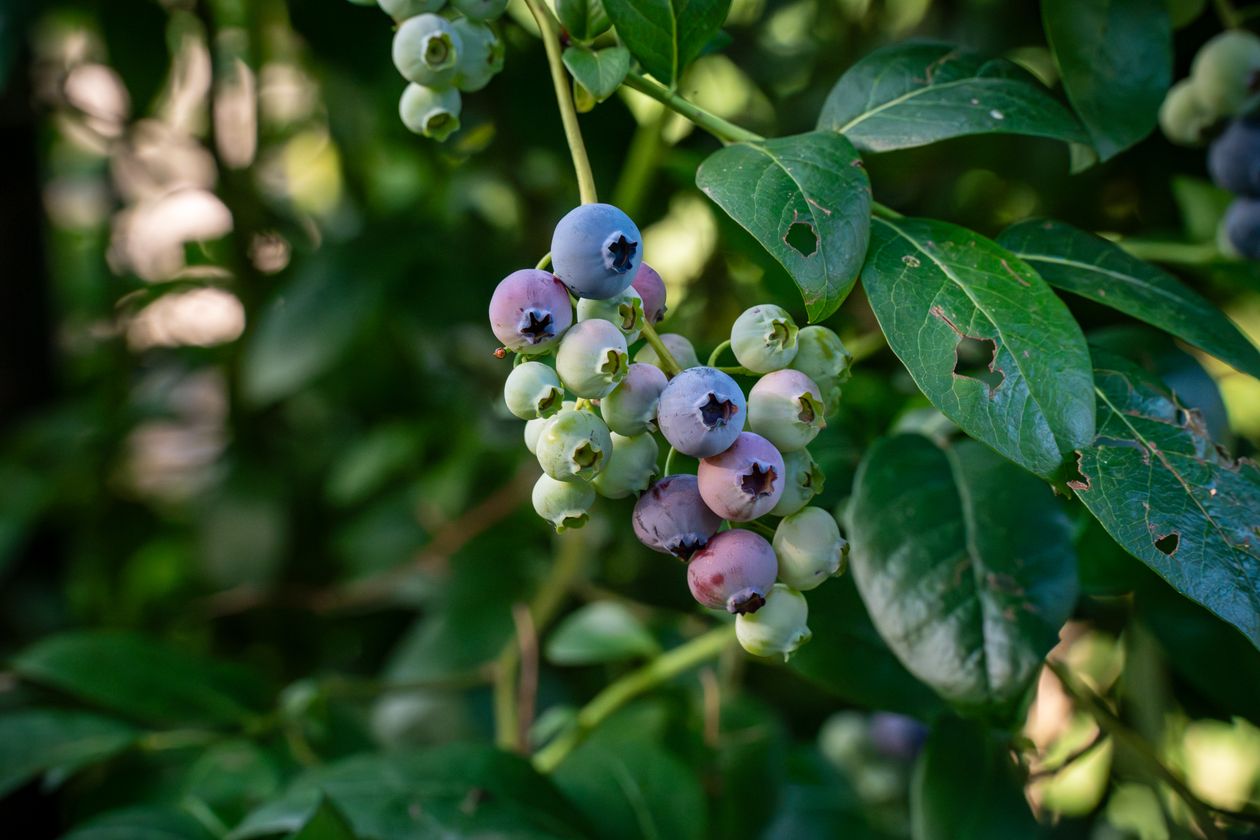
Minimum investment from around R250 per bush, with an eight-year term and up to two harvest payments per year. Projected returns are in the 16–26% per annum range. The blueberries are sold through contracted export and local retail channels. Fedgroup has invested R20 million of its own capital into these farms.
2. Macadamia Trees
Minimum investment from around R2,200 per tree, with an eight-year term and one harvest payment per year. Projected returns of 15–32% per annum. South Africa is the world’s largest macadamia producer, and global demand for the nuts is strong. Fedgroup’s partner orchards include mature trees, so you can participate from the first harvest.
3. Moringa Trees
Minimum investment from around R100 per tree, with a three-year term. This is the shortest-term asset on the platform and a good option if you want to test the model without a long lock-in. Projected returns of 14–24% per annum, paid up to twice a year. Moringa is a fast-growing, drought-resistant “superfood” tree with growing demand in health-food markets.
4. Pistachio Trees
Minimum investment from around R2,500 per tree, with a 15-year term — the longest asset on the platform. Projected returns of 14–34% per annum, paid annually. Pistachios thrive in arid conditions like Prieska in the Northern Cape, where the project is based. This is a long-term, patient-capital play for investors comfortable with extended lock-in.
5. Beehives
Minimum investment from around R3,000 per hive, with a 10-year term and up to two payments per year. Projected returns of 10–25% per annum. The hives are swarmed and managed by professional beekeepers, with honey sold through contracted buyers. Beekeeping supports pollination and biodiversity — a genuinely impact-aligned asset.
6. Solar Panels
Minimum investment from around R7,500 per panel, with a 20-year term and 12 monthly payments per year. Projected returns of 10–32% per annum. Solar is the most popular asset on the platform — demand regularly outstrips supply. Panels are installed on commercial sites and generate electricity sold under power purchase agreements, giving you monthly income. If you want regular cash flow rather than biannual harvest payments, solar is the asset to look at.
7. Lettuce Stacks
Minimum investment from around R7,300 per stack, with a seven-year term and 12 monthly payments per year. Projected returns of 12–38% per annum. Lettuce stacks are grown vertically using hydroponics in controlled indoor environments, which dramatically reduces water use and weather risk. This is a high-tech agriculture play with monthly income.
8. Nursery Saplings
Minimum investment from around R150 per sapling, with a short two-year term and a single payment at the end. Projected return of around 10% per annum. Saplings are grown in one of South Africa’s biggest nurseries and sold to commercial growers. This is the lowest entry point on the platform and the shortest commitment.
How the Returns Actually Work
One of the most important things to understand about Impact Farming is that returns are variable and not guaranteed. The ranges quoted above (10–34% per annum depending on the asset) are Fedgroup’s conservative internal projections, not a contractual yield.
However, the first three years of results published by Fedgroup have been in line with those projections, and the company says it is on track to meet its internal rate of return targets of around 10% over the lifetime of the assets. Some assets have the potential to deliver significantly more — macadamia and pistachio trees in particular have higher upside if global nut prices remain strong.
Here is the key mechanic that makes Impact Farming attractive: your capital is repaid to you during the term, not at the end. With each harvest payment, a portion goes towards repaying your initial purchase price. Once your capital has been returned, every subsequent payment is pure profit. This means you start de-risking your position well before the term ends, which is fundamentally different from a fixed-term deposit where you only see your capital back at maturity.
The Risks You Need to Understand
Fedgroup itself classifies Impact Farming as a high-risk product. This is not a marketing footnote — it is a genuine assessment, and you should treat it that way. Here are the specific risks:
- Unregulated status: Impact Farming falls outside financial regulation. If something goes wrong, you do not have the protection of the Financial Advisory and Intermediary Services Act or the ombud. Fedgroup has structured the product to be ready for the incoming COFI framework, but until that is enacted, you are relying on Fedgroup’s governance.
- Weather and biological risk: Droughts, floods, hail, pests, and disease can affect harvests. Blueberries, macadamias, and beehives are all exposed to environmental conditions. Fedgroup builds insurance and risk mitigation into its model, but a severe event could still reduce your returns.
- Commodity price risk: The price of macadamia nuts, blueberries, honey, and electricity can fluctuate. A glut in global macadamia supply or a downturn in export demand could compress the prices your farmer receives, which flows through to your income.
- Counterparty risk: Your returns depend on the farmer growing and selling the harvest successfully, and on Fedgroup’s partner farms and buyers honouring their contracts. If a farm fails or a buyer defaults, your income could be affected.
- No liquidity: You cannot sell your asset or withdraw your money before the term ends. There is no secondary market. Once you have invested, you are committed for the full term — which can be up to 20 years for solar panels.
- You do not own the asset at the end of the term: When the term expires, the asset (the tree, beehive, or solar panel) does not transfer to you. You have simply received income and capital back over the period.
If any of these risks make you uncomfortable, Impact Farming is probably not the right fit — and that is perfectly okay. A good investment is one you can hold through its full term without losing sleep.
How to Get Started
If you have decided Impact Farming deserves a small allocation in your portfolio, getting started is straightforward:
- Download the Fedgroup App from the App Store or Google Play.
- Register and FICA yourself. You will need to upload a copy of your ID and proof of address. This is a one-time process.
- Fund your wallet. EFT or debit order into the in-app wallet.
- Choose your asset. Browse the available assets (which vary based on supply — popular assets sell out quickly). Add your chosen asset to your cart and check out.
- Wait for harvest payments. Income is paid into your wallet on the schedule for your asset (monthly, bi-annually, annually, or once-off). You can withdraw it to your bank account or reinvest it.
There are zero fees on the investor side. Fedgroup earns money from the farmer on the borrowing side, which is how the platform sustains itself.
Tax Considerations
Because Impact Farming is an unregulated alternative investment and not a standard financial product, the tax treatment is not neatly packaged like an ETF or a unit trust. Income earned from your assets is generally treated as income (similar to rental income from a physical asset) rather than as a capital gain. This means:
- Income payments are typically subject to income tax at your marginal rate, not the more favourable 40% inclusion rate that applies to capital gains.
- Impact Farming assets cannot be held inside a Tax-Free Savings Account (TFSA), which is a meaningful drawback if you were hoping to shelter the returns from tax.
- Keep records of all your income payments and consult a tax practitioner, particularly once your cumulative income exceeds the interest exemption thresholds (currently R23,800 for under-65s).
Where It Fits in a Portfolio
Impact Farming is a satellite holding, not a core one. The core of your portfolio should still be low-cost, diversified, liquid investments like JSE-listed ETFs, retirement annuities, and an emergency fund. Impact Farming makes sense as a small allocation — perhaps 5–10% of your total portfolio — for investors who:
- Want true diversification away from the stock market
- Are comfortable locking capital away for 3–20 years
- Want to support real-world, impact-aligned projects
- Have already built their emergency fund and core investments
If you are still building your emergency fund or paying off high-interest debt, address those first. Impact Farming is for investors who have surplus capital they are willing to commit to a long-term alternative play.
Conclusion
Fedgroup Impact Farming is a genuinely innovative product in the South African investment landscape. It is one of the few ways a retail investor can get direct exposure to commercial farming and renewable energy assets from as little as R500, with zero platform fees and the potential for double-digit returns. The fact that you earn capital back over the term — rather than waiting for a lump sum at the end — is an attractive structural feature.
But it is unregulated, illiquid, weather-dependent, and classified by Fedgroup itself as high-risk. Treat it accordingly: keep your allocation small, understand the risks, and only invest money you will not need for the full term.