
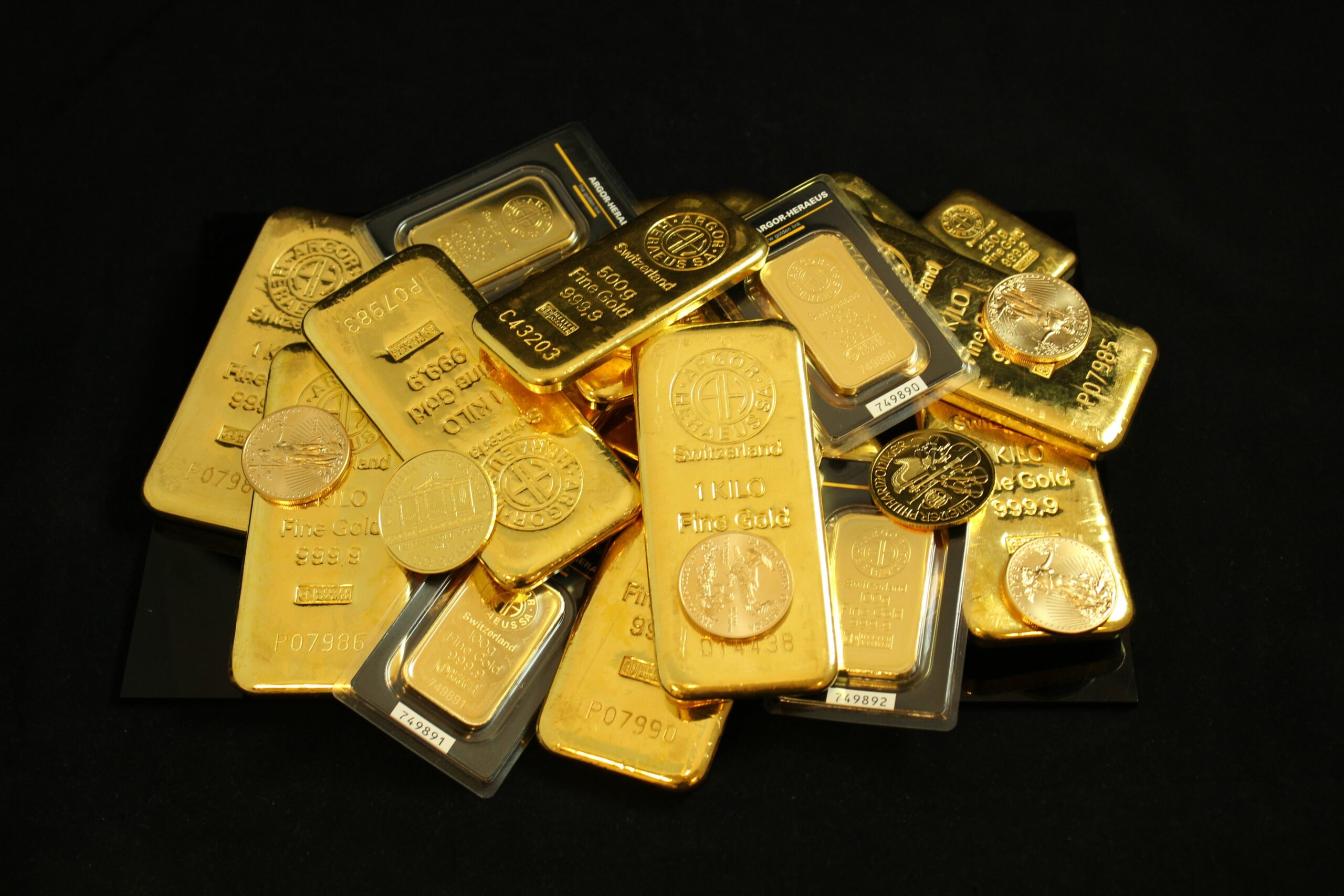

In September 2025, we wrote about the Satrix RESI ETF when it was up 70% year-to-date and looked like the standout performer on the JSE. What happened next was extraordinary. The ETF went on to deliver 142% in a single 12-month period, won two SALTA awards for the best total investment returns over both 5 and 10 years in SA equity, and became the most talked-about fund on the Johannesburg Stock Exchange. Then gold crashed 29% from its January 2026 peak, and the question on every investor’s mind became: is this still a smart investment, or have we missed the boat?
Disclaimer: I am not a financial advisor. This information is for educational purposes only and should not be considered as financial advice. Always do your own research and consider seeking advice from a qualified financial professional before making any investment decisions.
This is a deep dive update on the Satrix RESI ETF (STXRES) — what has changed since our original article, what the fund looks like right now, whether the numbers justify the hype, and how a boring investor should think about including it in a portfolio without getting burned.
Quick Recap: What Is the Satrix RESI ETF?
The Satrix RESI ETF tracks the FTSE/JSE Capped Resources 10 Index, which holds the 10 largest resource companies listed on the JSE, ranked by investable market capitalisation. No single company may exceed 30% of the index at each quarterly rebalance, which prevents the fund from becoming a one-stock bet. The ETF was launched on 10 April 2006 — making it 20 years old — and has a portfolio value of approximately R3.1 billion. It pays quarterly dividends and has a Total Investment Charge (TIC) of 0.49%, which includes a TER of 0.43% and transaction costs of 0.06%.
What Has Changed Since September 2025
A lot. When we last wrote about STXRES, gold was trading around $3,200–$3,400 per ounce and the ETF was up 70% for the year. Since then:
- Gold smashed through $5,000 in January 2026, setting a new all-time record. The gold miners in the ETF surged with it.
- Gold then crashed 29% from its January peak in one of the biggest single-day drops on record, before partially recovering. Gold is still up roughly 15% year-to-date as of mid-2026.
- STXRES delivered 142.24% total return over the 12 months ending December 2025 — the best 1-year performance of any broad ETF on the JSE.
- STXRES won two SALTA awards at the 2026 South African Listed Tracker Awards: best total investment returns over 5 years and over 10 years in SA equity, with a 10-year compounded return of 21.5% per annum.
- Platinum and palladium rallied strongly alongside gold, boosting the PGM miners that make up roughly 25% of the fund.
- The holdings shifted significantly as gold miners grew to dominate the fund, while diversified miners like BHP (which was in the original article) have been overtaken.
Current Holdings: A Precious Metals Juggernaut
As of May 2026, the Satrix RESI ETF is overwhelmingly a gold and platinum play. Here are the 10 holdings and their weightings:
- Gold Fields (GFI) — 22.46%
- AngloGold Ashanti (ANG) — 20.88%
- Valterra Platinum (VAL) — 12.74%
- Anglo American (AGL) — 10.25%
- Impala Platinum (IMP) — 7.20%
- Harmony Gold (HAR) — 6.42%
- Sibanye Stillwater (SSW) — 5.44%
- Glencore (GLN) — 5.24%
- Sasol (SOL) — 4.68%
- Northam Platinum (NPH) — 4.42%
The picture is striking. Gold miners (Gold Fields, AngloGold, Harmony) now account for roughly 49.8% of the fund. Platinum group metals miners (Valterra, Impala, Sibanye, Northam) account for another 29.8%. Together, precious metals make up nearly 80% of STXRES. The remaining 20% is split between Anglo American (diversified mining), Glencore (diversified mining and commodities), and Sasol (energy and chemicals).
This is not the same fund it was a few years ago. When resource stocks were out of favour, the ETF was more balanced across mining sub-sectors. The gold price explosion has transformed it into what is essentially a leveraged bet on gold and platinum prices. That cuts both ways.
The Numbers: SALTA Award-Winning Performance
At the 2026 SALTA Awards, STXRES won the total investment returns category for SA equity over both 5 and 10 years. Here is the performance data as of 30 April 2026:
- 1-year return: 84.81%
- 3-year return (annualised): 25.15%
- 5-year return (annualised): 17.91%
- 10-year return (annualised): 18.89%
- Highest annual rolling return: 84.81%
- Lowest annual rolling return: -23.84%
That 10-year annualised return of 18.89% is exceptional. For context, the JSE Top 40 has delivered roughly 12–13% annualised over the same period. STXRES has beaten the broad market by nearly 6 percentage points per year over a decade. That is the kind of outperformance that turns heads — and it is exactly the kind of number that should also trigger caution.
But note the lowest annual rolling return: -23.84%. This fund does not go up in a straight line. It has experienced years where it lost nearly a quarter of its value. Anyone who bought at the top of a commodity cycle and panicked during the inevitable downturn would have been badly hurt. The 142% gain and the -23.84% loss are two sides of the same coin — this is a high-volatility fund that rewards patience and punishes panic.
What Drove the 142% Surge?
Gold’s Historic Rally
The primary driver was gold. After rising 27% in 2024 and 67% in 2025, gold smashed through $4,000 in October 2025 and then $5,000 in January 2026. Global investors poured a record $89 billion into gold ETFs in 2025, doubling total gold ETF assets to $559 billion. Central banks — particularly China’s — were on a buying spree, adding bullion to reserves at the fastest pace in decades. Geopolitical tensions, Trump tariff uncertainty, and a weakening US dollar all pushed investors toward the ultimate safe haven.
For gold miners, the effect was magnified by operational leverage. When the gold price rises 24%, a gold miner’s EBITDA can jump 90% or more — because the mine’s fixed costs (labour, equipment, energy) stay the same while revenue surges. AngloGold Ashanti saw a 93% jump in EBITDA when its average gold price received rose just 24%. This is why STXRES returned 142% while gold itself “only” rose about 67% in 2025.
Platinum Group Metals Recovery
Adding fuel to the fire, platinum and palladium prices rallied strongly in late 2025 and into 2026. The PGM miners — Valterra Platinum, Impala, Sibanye, and Northam — make up roughly 30% of the ETF. When PGM prices rose alongside gold, nearly the entire fund was pushing in the same direction at the same time.
Rand Weakness
Most of the companies in STXRES earn dollars from selling commodities on global markets but report earnings in rands. A weaker rand boosts their rand-denominated profits, which boosts their share prices. The rand weakened against the dollar through much of 2025, providing an additional tailwind for the ETF.
What Happened When Gold Crashed
In January 2026, gold peaked above $5,500 per ounce. Then it posted its biggest single-day drop on record, falling sharply before stabilising. By mid-2026, gold had retreated approximately 29% from its January peak, slipping below $4,000 at times. STXRES felt the impact immediately — the ETF’s 1-year rolling return dropped from 142% to 84.81% as of April 2026.
This is the critical lesson: STXRES is not a one-way bet. It is a leveraged play on commodity prices, and commodity prices are cyclical. The same operational leverage that amplifies gains on the way up amplifies losses on the way down. When gold falls 29%, gold miners do not fall 29% — they can fall much more, because their profit margins compress rapidly when the selling price of their product drops while their costs remain fixed.
Smart Play or Danger Signal?
The honest answer is: it depends on your time horizon and how you use it.
The Bull Case
- Commodity supercycle: Major banks including JPMorgan and Goldman Sachs remain constructive on gold, with JPMorgan targeting $6,300 by end-2026. Central bank buying shows no signs of slowing.
- Proven long-term track record: 18.89% annualised over 10 years, SALTA award-winning. This is not a flash in the pan.
- South Africa’s competitive advantage: South Africa has some of the world’s deepest and richest gold and platinum deposits. When commodity prices are high, these mines generate enormous cash.
- Dividend growth potential: The current distribution yield is around 1.36%, at the low end of its 20-year range (which has been as high as 7%). If commodity prices stay elevated, dividends could grow significantly.
- Hedge against rand depreciation: The companies earn dollar revenue, making this ETF a natural rand hedge.
The Bear Case
- Chasing performance: Buying after a 142% gain is the textbook definition of chasing returns. Historically, investors who buy sector funds after massive run-ups tend to underperform.
- Gold is already up massively: Gold rose 27% in 2024, 67% in 2025, and another 15% in early 2026 before crashing. Much of the easy gains may already be behind us. JPMorgan notes the US equity premium over international equities is still 34% versus its 19% long-run average — but the same mean-reversion risk applies to commodity prices.
- Extreme concentration: Nearly 80% of the fund is in precious metals. The top two holdings (Gold Fields and AngloGold) account for 43.3%. This is more concentrated than most index funds a conservative investor would hold.
- Cyclical risk: Commodities are cyclical. When the current cycle turns — and it always does — STXRES can lose 20–30% in a year, as its track record shows.
- Operational risks: South African mining faces persistent challenges — power supply issues, deep-level mining costs, regulatory uncertainty, and labour relations. These do not disappear when commodity prices are high.
- Falling gold ETF demand: The World Gold Council reported net outflows from gold ETFs in May and June 2026, driven by bets on Fed rate tightening. Morgan Stanley said its $5,200 gold forecast for H2 2026 “appears increasingly dependent on a revival in ETF buying.”
How to Position STXRES in Your Portfolio
The boring investor approach to a fund like this is clear: it is a satellite holding, not a core position. Here is how to think about it.
Keep Your Core Boring
Your core portfolio should consist of broad-market index funds — the Satrix 40 for local equity, the Satrix MSCI World for global equity, and bond ETFs for stability, as outlined in our three-fund portfolio guide. These give you exposure to the entire market at minimal cost and are designed to be held for decades through all market conditions.
Use STXRES as a Satellite
A satellite allocation is a smaller, thematic position that gives you extra exposure to a trend you believe in — without risking your financial future if the theme reverses. For STXRES, a reasonable satellite allocation is 5–10% of your total portfolio. If commodities continue their supercycle, that 5–10% meaningfully boosts your overall returns. If the cycle turns and STXRES drops 30%, your core portfolio keeps you on track.
Dollar-Cost Average In
Given the extreme volatility of commodity stocks, this is a perfect candidate for dollar-cost averaging. Do not invest a lump sum after a 142% gain. Set up a monthly debit order and buy consistently, regardless of what gold is doing. If gold crashes, you buy more units at lower prices. If it keeps rising, you participate. This removes the impossible task of timing your entry into one of the most volatile sectors on the JSE.
Rebalance Annually
If STXRES surges and grows from 5% to 12% of your portfolio, sell the excess and rebalance back to your target allocation. This forces you to take profits when the sector is hot — which is exactly when it is hardest to sell and easiest to get greedy. As we discussed in our article on benefiting from market downturns, rebalancing is the mechanical discipline that keeps you from riding commodity cycles all the way up and all the way back down.
Tax and Practical Considerations
- TFSA eligible: STXRES can be held inside a Tax-Free Savings Account. Given the fund’s high volatility and potential for large capital gains, this is an excellent fit — all growth would be permanently tax-free.
- Quarterly dividends: The fund pays distributions quarterly. Recent payouts have ranged from 12 cents to 196 cents per unit, reflecting the volatility of mining company dividends. The current yield is approximately 1.36%.
- Not Regulation 28 compliant: This fund cannot be held inside a retirement annity or pension fund, as it is a single-sector ETF that violates concentration limits.
- Available on EasyEquities and SatrixNOW: You can buy STXRES from as little as R100, with fractional share purchases supported.
The Verdict
The Satrix RESI ETF is not a danger signal, but it is also not a no-brainer buy. Its 10-year track record of 18.89% annualised and its SALTA award wins are genuinely impressive. South Africa’s resource sector has been one of the best-performing segments of the global market, and when commodity prices are high, these companies print cash.
But the 142% gain is behind us, not ahead of us. Gold has already risen 27% in 2024, 67% in 2025, and hit $5,000 before crashing 29%. The easy money has been made. What comes next depends on whether the commodity supercycle continues — and nobody can predict that with certainty. JPMorgan says $6,300 by year-end. Morgan Stanley says its forecast depends on ETF demand reviving. Both could be right or wrong.
The smart play is not to bet the farm. It is to allocate 5–10% of your portfolio to STXRES as a satellite holding, dollar-cost average in, and rebalance annually. If the commodity supercycle continues, you capture meaningful upside. If it reverses, your core portfolio of broad-market index funds keeps you on track. That is the boring investor way — and it is exactly how you should approach a fund that can return 142% one year and -23.84% the next.
Your action step: If you believe in the commodity supercycle and want exposure to South Africa’s resource giants, consider allocating 5–10% of your portfolio to STXRES. Set up a monthly debit order rather than investing a lump sum. Hold it inside your TFSA if you have unused allowance. And commit to rebalancing once a year — selling when it surges, buying when it falls. That discipline is worth more than any prediction about where gold is heading next.