
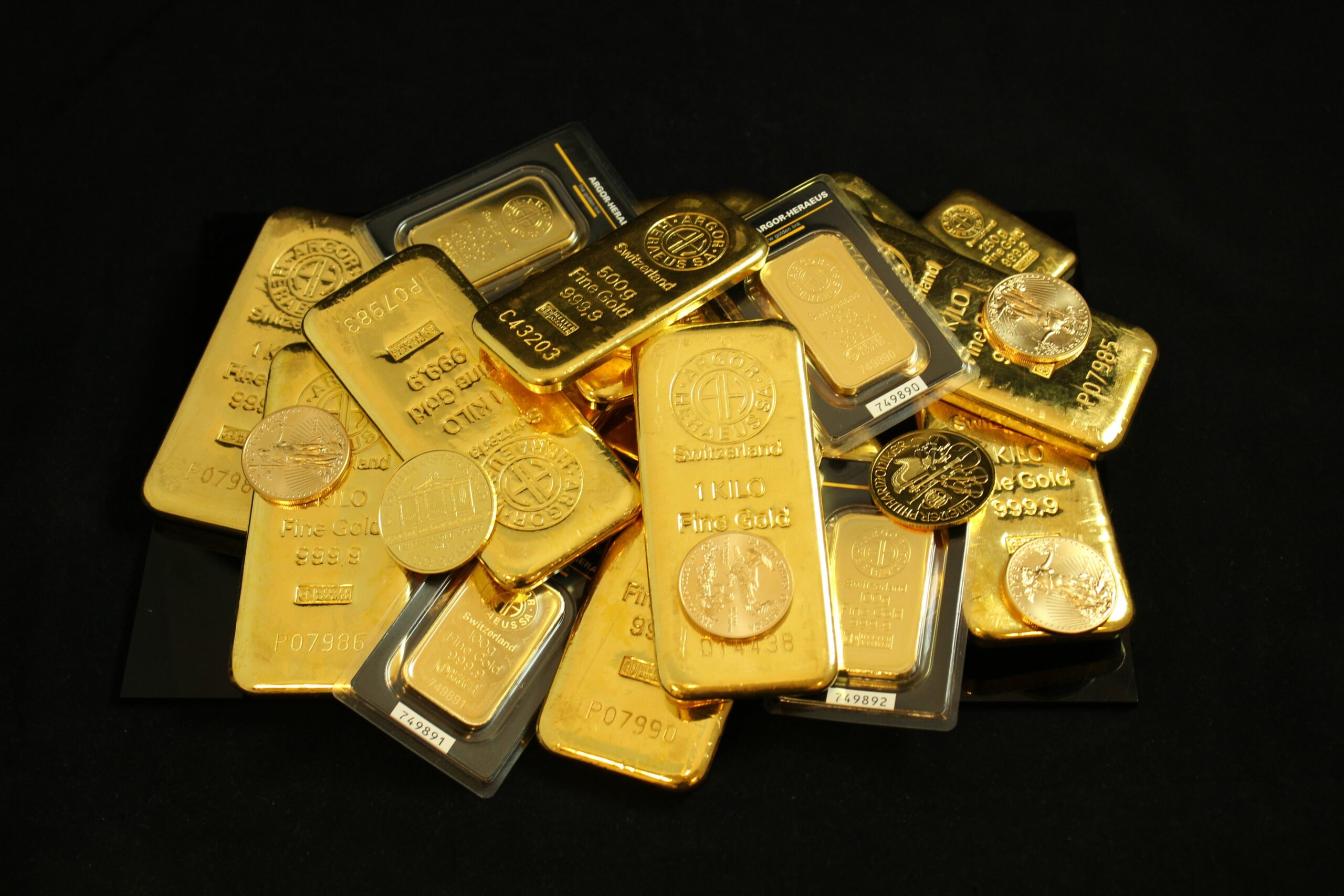

Gold has always been the ultimate “safe haven” investment, but in 2025 and 2026 it stopped being boring. The yellow metal rose 27% in 2024, surged 67% in 2025, smashed through $5,000 per ounce in January 2026, posted its biggest single-day drop on record, and then retreated 29% from its peak. At one point, gold was trading more like a meme stock than a centuries-old store of value. For South African investors, this volatility raises an urgent question: after all that, do gold ETFs still belong in your portfolio?
Disclaimer: I am not a financial advisor. This information is for educational purposes only and should not be considered as financial advice. Always do your own research and consider seeking advice from a qualified financial professional before making any investment decisions.
In this article, we break down gold’s extraordinary 2025–2026 journey, compare the JSE-listed gold ETFs you can buy in rands right now, examine the difference between physical gold ETFs and gold miner ETFs, and give you a framework for deciding whether gold deserves a place in your investment strategy — and if so, how much.
Gold’s Extraordinary 18-Month Run
To understand where gold is now, you need to appreciate the scale of what just happened. Here is the timeline:
- 2024: Gold rose 27%, driven by central bank buying, geopolitical tensions, and expectations of US interest rate cuts.
- 2025: Gold surged 67% — its strongest yearly performance since 1979. The price broke through $4,000 in October 2025, driven by record ETF inflows of $89 billion globally, relentless central bank purchases (particularly from China), and a weakening US dollar. Gold set new records 53 times during the year.
- January 2026: Gold smashed through $5,000 and peaked above $5,594 per ounce. Global gold ETF assets doubled to a record $559 billion. Average daily trading volumes hit $361 billion. Then gold posted its biggest single-day drop on record, falling sharply in what CNN described as gold “trading like a meme stock.”
- Mid-2026: Gold has retreated approximately 29% from its January peak, slipping below $4,000 at times before partially recovering. It is still up roughly 15% year-to-date, but the momentum has clearly shifted.
For South African investors, the rand-denominated returns were even more dramatic because much of the gold rally coincided with rand weakness. When you multiply a rising dollar gold price by a weakening rand, the returns amplify. This is why the NewGold ETF on the JSE delivered a 14.7% compound annual growth rate since its listing in November 2004 — actually outperforming the JSE All Share Index (with dividends reinvested) over the same period, which delivered 13.4% annualised. A lump of inert metal beat South Africa’s entire stock market.
JSE-Listed Gold ETFs: Your Options
There are two primary gold ETFs listed on the JSE that give you direct exposure to the physical gold price. Both are rand-denominated and available on platforms like EasyEquities and SatrixNOW.
1. NewGold ETF (GLD) — The Original and Largest
Launched on 1 November 2004, NewGold was the first physically-backed gold ETF on the JSE. It is also the largest ETF on the exchange by market capitalisation, with total net assets of approximately R40.3 billion and 436,568 ounces of physical gold held in custody by ICBC Standard Bank. Each security represents approximately 1/100th of an ounce of gold, fully backed by physical bullion.
Here are the key numbers as of March 2026:
- 3-month return: 8.22%
- 1-year return (annualised): 36.25%
- 3-year return (annualised): 30.35%
- 5-year return (annualised): 25.33%
- Since inception (annualised): 16.76%
- Annual sales charge: 0.30%
- Best annual return: 68.89%
- Worst annual return: -20.27%
- Maximum drawdown: -30.83%
NewGold tracks the spot gold price directly. It is structured as a debenture rather than a traditional ETF, and it complies with Shariah Law, making it suitable for Muslim investors. It does not engage in scrip lending. The fund pays no dividends — your return comes entirely from gold price appreciation (or depreciation). It can be held inside a Tax-Free Savings Account.
2. 1nvest Gold ETF (ETFGLD) — The Challenger
The 1nvest Gold ETF is a newer alternative that also tracks the gold spot price. It is issued by Standard Bank under the 1nvest brand and has a fund size of approximately R3.15 billion — significantly smaller than NewGold but still substantial. Each unit is similarly backed by physical gold holdings.
Performance data as of mid-2026:
- 1-year return: 36.42%
- 5-year return: 201.86%
- 10-year return: 304.05%
- Year-to-date: ~7.25%
- 52-week range: R542.51 – R900.00
Both GLD and ETFGLD track the same underlying asset — the US dollar gold spot price — so their performance will be nearly identical. The choice between them comes down to liquidity, cost, and platform availability. NewGold is larger, more liquid, and has a longer track record. 1nvest Gold may be slightly cheaper depending on your broker. For most investors, either one will do the job.
Physical Gold ETFs vs Gold Miner ETFs
This is a critical distinction that many investors miss. There are two very different ways to get gold exposure on the JSE, and they behave quite differently:
Physical Gold ETFs (GLD, ETFGLD)
These ETFs hold actual gold bullion. Their price tracks the gold spot price directly. If gold goes up 10%, your ETF goes up approximately 10% (minus fees). If gold goes down 10%, your ETF goes down approximately 10%. The relationship is simple and transparent. You own gold, not a company that mines gold.
Gold Miner ETFs (STXRES)
The Satrix RESI ETF holds shares in gold and platinum mining companies — Gold Fields, AngloGold Ashanti, Harmony Gold, and others. When gold prices rise, mining company shares tend to rise more than the gold price itself, because of operational leverage. A 24% increase in the gold price can produce a 93% jump in a miner’s EBITDA, because the mine’s costs stay fixed while revenue surges. This is why STXRES returned 142% in 2025 while gold itself “only” rose 67%.
But the leverage works in both directions. When gold falls 29%, mining companies can fall much more, because their profit margins compress rapidly. The miner’s costs — labour, electricity, equipment, safety compliance — do not decrease when the gold price drops. Physical gold ETFs do not have this problem. If gold falls 29%, your physical gold ETF falls approximately 29%. No more, no less.
For a deeper analysis of the Satrix RESI ETF specifically, see our Satrix RESI deep dive. For most investors, the question is: do you want pure gold price exposure (physical gold ETF) or leveraged exposure to gold miners (STXRES)? They are different investments with different risk profiles, and confusing them can lead to unpleasant surprises.
What the Experts Are Saying Now
The gold market is deeply divided right now. Here is what major institutions are saying:
- JPMorgan Chase: Expects gold to hit $6,300 per ounce by end-2026, citing central bank purchases and a still-overvalued US dollar (10% above fair value). They remain constructive on gold’s long-term outlook.
- Morgan Stanley: Has a $5,200 per ounce forecast for H2 2026, but warns it “appears increasingly dependent on a revival in ETF buying and evidence that lower oil prices are feeding through to a more dovish interest-rate outlook.” Soft ETF demand is a growing headwind.
- Goldman Sachs: Has tempered its optimism, lowering its December gold price forecast and reducing projections for ETF demand.
- Standard Chartered: Notes that while softer ETF demand could weigh on bullion in the near term, central bank purchases remain “a key source of support.”
The picture is mixed. The long-term structural drivers — central bank buying, geopolitical uncertainty, dollar weakness — remain intact. But the short-term signals are flashing caution: gold ETFs recorded net outflows of 16 metric tons in May 2026 and continued to see outflows in the first half of June. The record $89 billion of inflows in 2025 may not be repeated. When the momentum shifts, gold can fall fast, as January’s crash demonstrated.
The Case for Gold in Your Portfolio
Diversification and Crash Insurance
Gold’s primary role in a portfolio is not to generate returns — it is to provide diversification and act as “crash insurance.” During the 2008 financial crisis and the 2020 COVID crash, the rand gold price rallied strongly while equity markets collapsed. This negative correlation with equities is what makes gold valuable in a diversified portfolio. When everything else is falling, gold often rises — or at least falls less.
Rand Hedge
Because gold is priced in US dollars, a rand-denominated gold ETF gives you a natural currency hedge. When the rand weakens against the dollar, your gold ETF returns increase in rand terms, even if the dollar gold price stays flat. For South African investors heavily exposed to local assets, this is a valuable diversification benefit. As we discussed in our gold investment guide, this is one of the strongest arguments for holding gold in South Africa.
Inflation Protection
Over very long periods, gold has maintained its purchasing power. An ounce of gold bought a decent suit 100 years ago, and an ounce of gold still buys a decent suit today. It does not generate income, but it preserves capital across generations in a way that fiat currencies do not.
The Case Against Gold
No Income Generation
Gold pays no dividends or interest. Unlike shares in the JSE Top 40, which distribute a portion of their profits to shareholders quarterly, or bond ETFs that pay regular interest, gold simply sits there. Your entire return depends on price appreciation. Over decades, the opportunity cost of holding gold instead of income-generating assets can be enormous — especially when you account for the power of reinvested dividends.
Extreme Volatility
The 2025–2026 gold ride has made one thing clear: gold is not the stable, boring asset it is often portrayed as. NewGold’s worst annual return is -20.27%, and its maximum drawdown is -30.83%. In January 2026, gold had its best day since 2009 just two days after having its worst day on record. This is not the behaviour of a sleepy safe haven. If you are holding gold to reduce portfolio volatility, be aware that gold itself can be remarkably volatile.
After a 67% Surge, Much of the Easy Money Is Gone
Gold rose 94% in 18 months (27% in 2024 plus 67% in 2025). Even with the 29% pullback, gold is still up roughly 40% from the start of 2024. Buying at current levels is not the same as buying in 2023 when gold was trading below $2,500. The major banks’ forecasts ($5,200–$6,300) suggest further upside, but forecasts are not guarantees — and even JPMorgan’s bullish target of $6,300 represents only about 50% upside from current levels, far less than what gold delivered in 2025.
How to Position Gold in Your Portfolio
The boring investor approach to gold is measured and disciplined. Here is how to think about it:
Keep It to 5–10%
Most financial advisors recommend a gold allocation of 5–10% of your total portfolio. This is enough to provide meaningful diversification and crash protection without dragging down your long-term returns. If gold surges 67% again, a 10% allocation meaningfully boosts your overall portfolio. If gold falls 30%, the other 90% of your portfolio — your index funds and bonds — keeps you on track.
Use It as Insurance, Not a Bet
The purpose of holding gold is not to get rich from gold price movements. It is to have an asset that tends to perform well when your other investments are suffering. Treat it like insurance — you hope you never need it to save you, but you are glad it is there when crisis hits. If you find yourself constantly checking the gold price and trying to time your entry and exit, you are using it as a speculation, not as insurance.
Dollar-Cost Average In
Given gold’s extreme volatility — remember that 29% crash — this is another perfect candidate for dollar-cost averaging. Do not invest a lump sum after a 67% rally. Set up a monthly debit order and buy consistently. If gold crashes, you buy more units at lower prices. If it keeps rising, you participate. This removes the impossible task of timing the gold market.
Prefer Physical Gold ETFs Over Miner ETFs for the Insurance Role
If your goal is crash insurance and diversification, a physical gold ETF (GLD or ETFGLD) is the better choice. It tracks the gold price directly and provides the negative correlation with equities that you want during a crisis. A gold miner ETF like STXRES has higher upside potential during commodity booms but also higher downside risk during busts — it is a leveraged bet on gold, not insurance. For your core portfolio’s three-fund allocation, physical gold is the right tool.
Hold It in Your TFSA
Both NewGold and 1nvest Gold are TFSA-eligible. Given gold’s potential for large capital gains (it rose 67% in a single year), holding it inside your Tax-Free Savings Account means all of those gains would be permanently tax-free. This is an excellent fit — but remember your R36,000 annual TFSA limit, so balance your gold allocation against your other TFSA holdings.
The Verdict
Gold’s wild ride in 2025–2026 does not change its fundamental role in a portfolio. It remains a diversifier, a rand hedge, and a store of value that has outperformed the JSE All Share Index over the past two decades. The crash from $5,500 to below $4,000 was dramatic, but gold is still up 15% year-to-date and roughly 40% since the start of 2024.
What has changed is the entry point. Buying gold at $5,000 after a 94% 18-month rally was clearly risky — and the 29% crash proved it. Buying at current levels (around $4,000) is more reasonable but still not cheap by historical standards. The major banks see further upside, but their forecasts depend on continued central bank buying and a revival in ETF demand, neither of which is guaranteed.
The boring investor’s approach is simple: hold 5–10% of your portfolio in a physical gold ETF (GLD or ETFGLD), dollar-cost average in, treat it as insurance rather than a speculation, and rebalance annually. If gold surges, take profits and restore your target allocation. If gold crashes, your monthly debit order is buying at a discount. This discipline is worth more than any prediction about where the gold price is heading next.
Your action step: If you do not already have gold exposure, consider allocating 5–10% of your portfolio to NewGold (GLD) or 1nvest Gold (ETFGLD). Set up a monthly debit order, hold it inside your TFSA, and stop checking the gold price daily. Gold is insurance — and insurance works best when you set it up and then forget about it.