

Gold has always held a special place in South Africa’s economy and culture. As one of the world’s largest gold producers historically, and with Johannesburg’s very name derived from the gold rush era, South Africans have a unique relationship with this precious metal.
Gold also had a wild ride recently — surging through 2025, smashing $5,000 an ounce in early 2026, then dropping sharply. That volatility made a lot of people ask the same question: how do I actually invest in gold from South Africa?
This guide covers every practical route — Krugerrands, physical bullion, gold ETFs, gold mining shares, and ETNs — with how to buy each one, what they cost, how they’re taxed, and how much gold makes sense in a portfolio. If you’re also interested in other commodities like oil, see our guide on buying oil shares and commodities in South Africa.
Disclaimer: I am not a financial advisor. This information is for educational purposes only and should not be considered as financial advice. Always do your own research and consider seeking advice from a qualified financial professional before making any investment decisions.
Why consider gold at all?
- A rand hedge. Gold is priced in US dollars. When the rand weakens, gold tends to become worth more in rand terms — useful when our currency takes a knock.
- Inflation and crisis insurance. Gold has historically held its value through periods of currency debasement, political uncertainty, and market stress. It often moves independently of shares and bonds, which is exactly what you want from a diversifier.
- No counterparty risk (if you hold physical). Unlike a share in a company or a bank deposit, a Krugerrand in your safe is an asset you own outright. No one can default on it.
Gold is not a wealth-builder on its own — it pays no dividends or interest — but it’s a useful form of insurance inside a broader portfolio.
The four ways to invest in gold in South Africa
1. Physical gold: Krugerrands and bullion
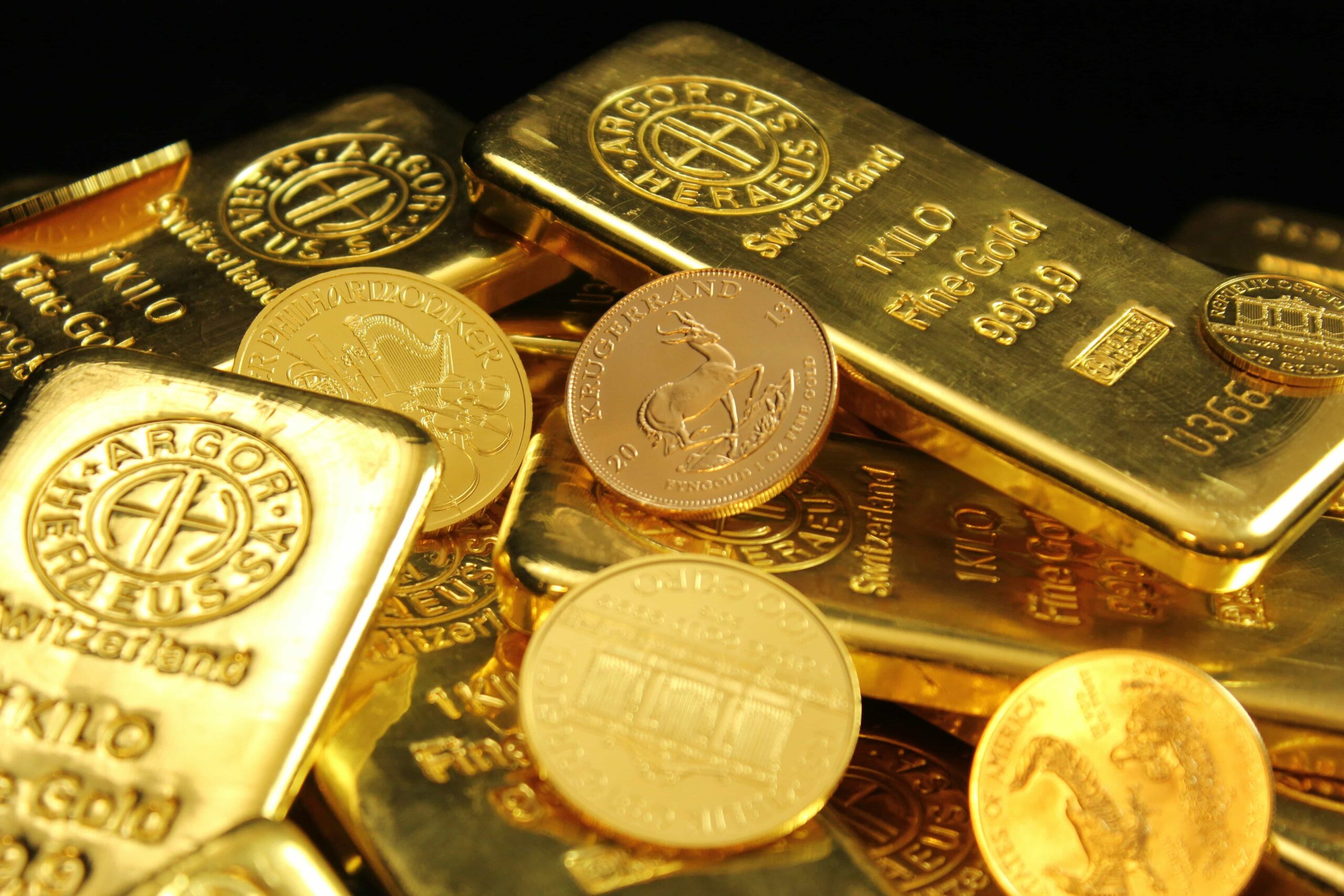
The Krugerrand is the world’s most widely held gold bullion coin, and it’s South African — minted from 22-carat gold and containing a full ounce of gold. You can also buy fractional Krugerrands (1/2, 1/4, and 1/10 ounce) and gold bars in various weights.
How to buy: Through reputable dealers (such as the South African Gold Coin Exchange / Scoin), or through FNB’s gold investment offering. You pay the spot gold price plus a premium (the dealer’s margin), which is higher on fractional coins.
What to watch:
- You need secure storage — a bank safe deposit box, a home safe, or a specialised vault.
- Insurance adds to the cost.
- The premium you pay over spot means gold has to rise a little just for you to break even.
Physical gold is the route for people who want the actual metal in their possession and value the zero-counterparty-risk aspect.
2. Gold ETFs
If you want gold exposure without storing metal, a gold ETF is the simplest option. The main one on the JSE is the NewGold ETF (sponsored by Absa, JSE code GLD). It’s backed by physical gold held in vaults, and its price tracks the rand price of gold — so you get gold’s performance without ever touching a coin.
How to buy: Through any platform that offers JSE ETFs — EasyEquities, SatrixNOW, Sygnia, or your bank’s trading platform — exactly like buying any other ETF. Search the code, place your order in rands.
What to watch:
- You pay an annual management fee (built into the price) instead of storage and insurance.
- No safe, no insurance, no dealer premium — but also no metal in your hand.
- For gold ETFs specifically — including the wild 2025–2026 price action and whether they still belong in your portfolio — see my gold ETFs deep dive.
3. Gold mining shares
Instead of buying gold, you buy shares in the companies that mine it — Gold Fields, AngloGold Ashanti, Harmony Gold, and others listed on the JSE.
This is not the same as investing in gold. Mining shares are equity, which means you take on company-specific risk: management quality, rising costs, labour unrest, electricity supply, and geopolitical issues can all hurt the share even when the gold price is rising. Miners are a leveraged play on gold — they can outperform in a gold bull market and underperform badly when costs spike or operations are disrupted. For a deeper look at how gold miners performed during the 2025–2026 gold rally, see our Satrix RESI ETF deep dive.
How to buy: Through any JSE trading platform, like any other share.
Gold miners suit investors who want equity exposure to the gold theme and are comfortable with the extra risk. If you simply want to track the gold price, use the ETF or physical route instead.
4. Gold ETNs and other routes
Exchange Traded Notes (ETNs) are another way to access gold exposure on the JSE. Unlike an ETF, an ETN is an unsecured debt instrument issued by a bank — so you carry the credit risk of the issuer, not the safety of backed metal. For a full explanation of how ETNs differ from ETFs, see my ETN explainer.
How the routes compare
| Route | What you own | Min. investment | Ongoing costs | Storage needed | Best for |
|---|---|---|---|---|---|
| Krugerrands / bullion | Physical metal | ~R30,000+ (1oz) | Storage + insurance | Yes | Crisis insurance, tangible ownership |
| NewGold ETF (GLD) | Gold-backed securities | From R5–R50 | Annual fee (~0.4–0.6%) | No | Simple, low-cost gold exposure |
| Gold mining shares | Equity in miners | Price of one share | Brokerage | No | Leveraged gold-theme exposure |
| Gold ETNs | Bank debt linked to gold | Low | Issuer fees | No | Specific structured exposure |
The downsides of gold
Gold has real drawbacks, and it’s worth being honest about them:
- No income. Gold pays no dividends or interest. Your return depends entirely on price appreciation, so you miss out on the compounding power of income that shares and bonds provide.
- Price volatility. “Safe haven” doesn’t mean stable. Gold can swing sharply, and in South Africa you get a double layer of volatility — the dollar gold price and the rand/dollar rate.
- Capital gains tax. When you sell gold (physical or ETF) at a profit, 40% of the gain is included in your taxable income for individuals. Physical gold and gold ETFs are both subject to CGT.
- Opportunity cost. Over long periods, equities have generally outperformed gold, especially with dividends reinvested. Money parked in gold is money not invested in productive, income-generating assets.
How much gold should you hold?
For most investors the answer isn’t all-or-nothing. A common guideline is around 5–10% of a diversified portfolio, treating gold as insurance rather than a core holding.
Your allocation depends on your goals and stage of life: a young investor with decades until retirement may need little or none, while someone closer to retirement who wants capital preservation might lean toward the higher end. Your risk tolerance and overall portfolio should drive the decision.
A note on TFSAs: some commodity-linked investments have restrictions inside a Tax-Free Savings Account, so check with your platform whether your chosen gold product is TFSA-eligible before assuming it qualifies. See my TFSA guide for the rules.
The bottom line
For most South Africans who want gold exposure without the hassle, the NewGold ETF is the easiest route — bought in rands on a local platform, no storage, no insurance. Krugerrands suit investors who want the metal in hand and value the zero-counterparty-risk aspect. Gold mining shares are a different, riskier bet on the companies, not the metal itself.
Whatever you choose, treat gold as a small, defensive slice of a broader portfolio built around productive assets — not as your main strategy.
Frequently asked questions
Is physical gold or the gold ETF better?
It depends on your priority. The ETF is cheaper and easier (no storage or insurance). Physical gold gives you the metal itself and zero counterparty risk, but costs more to buy and store.
Do gold ETFs pay dividends?
No. Gold produces no income, so gold ETFs don’t pay dividends — your return comes purely from the gold price rising.
Is gold a safe investment?
Gold is less risky than a single share, but it’s not risk-free. Its price can be volatile, especially in rand terms. “Safe haven” refers to its role as a diversifier, not to price stability.
Are gold mining shares the same as investing in gold?
No. Mining shares are equity in companies that mine gold. They’re influenced by the gold price but also by company costs, operations, and politics — they’re a riskier, leveraged play, not a direct gold investment.
How is gold taxed in South Africa?
Gold is subject to capital gains tax — 40% of your profit is included in your taxable income when you sell (for individuals). This applies to both physical gold and gold ETFs held outside a TFSA or retirement wrapper.